

Airplanes are beautiful dreams. Engineers turn dreams into reality
In this guide, we will learn about the most important steps and tools needed to make a paper airplane, but first, please adhere to the following:
WARNING:
-Please do not assemble or use the aircraft by children without direct parental supervision.
-These aircraft can fly at high speed! Collisions can cause injury. Please use caution. We and this site are not responsible for any injuries or property damage.
Materials needed to make paper airplane
A4 paper (if printing at home), scissors, ruler (for folding the paper accurately), non-waterproof adhesive.

How to assemble and make paper airplane
-Download the (pdf) file for the aircraft (the following explanation is for the Japanese Kawasaki T-4 aircraft).
-Print the file (print in color if possible) on thick paper. The paper can also be glued to cardboard after printing. Paper size for printing is (A4).

-Cut out the parts of the plane (each one separately) according to the bold black line ____

-Fold the paper upwards where there are lines and dots (....), the resulting lines and dots are hidden within the fold or appear within the corners of the fold. Also, fold the paper downwards where there are broken lines (_ _ _), the resulting lines are visible on the fold.
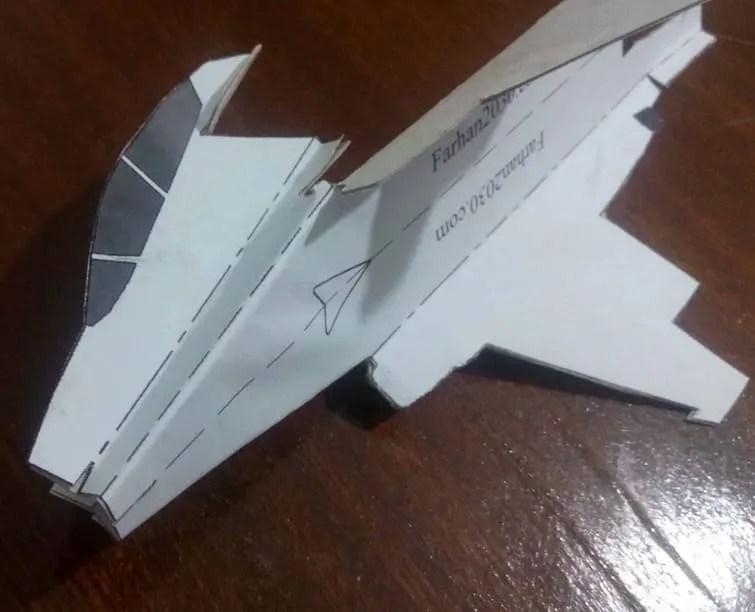
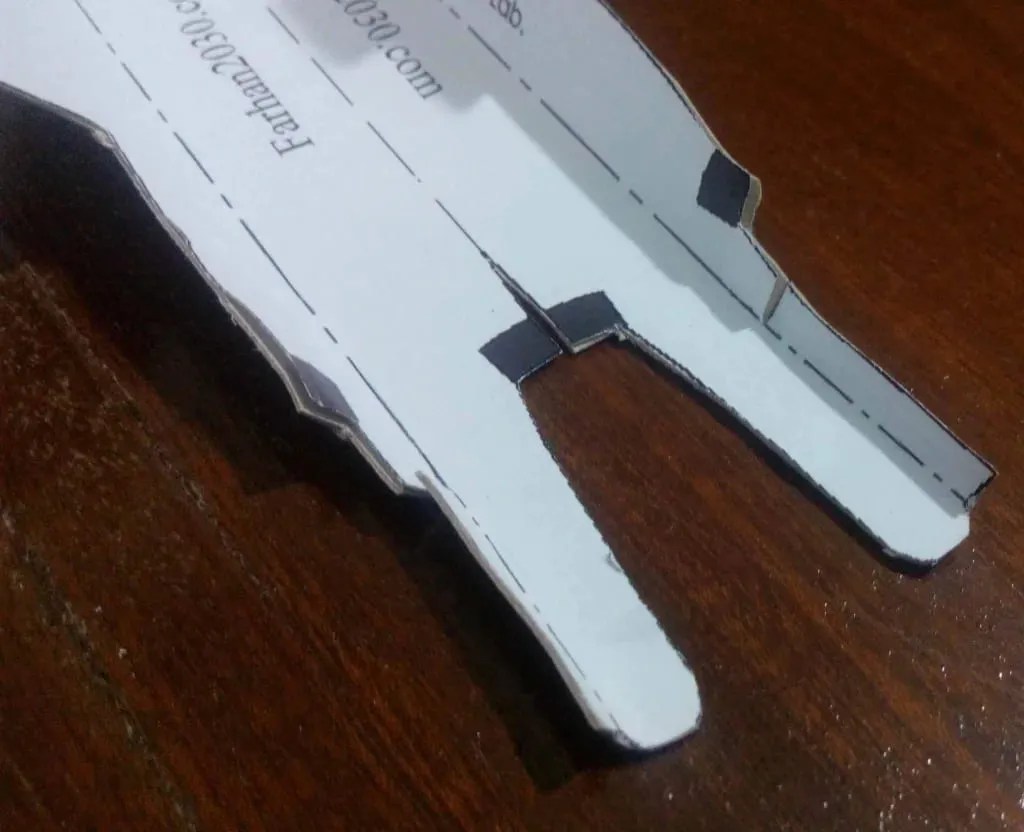
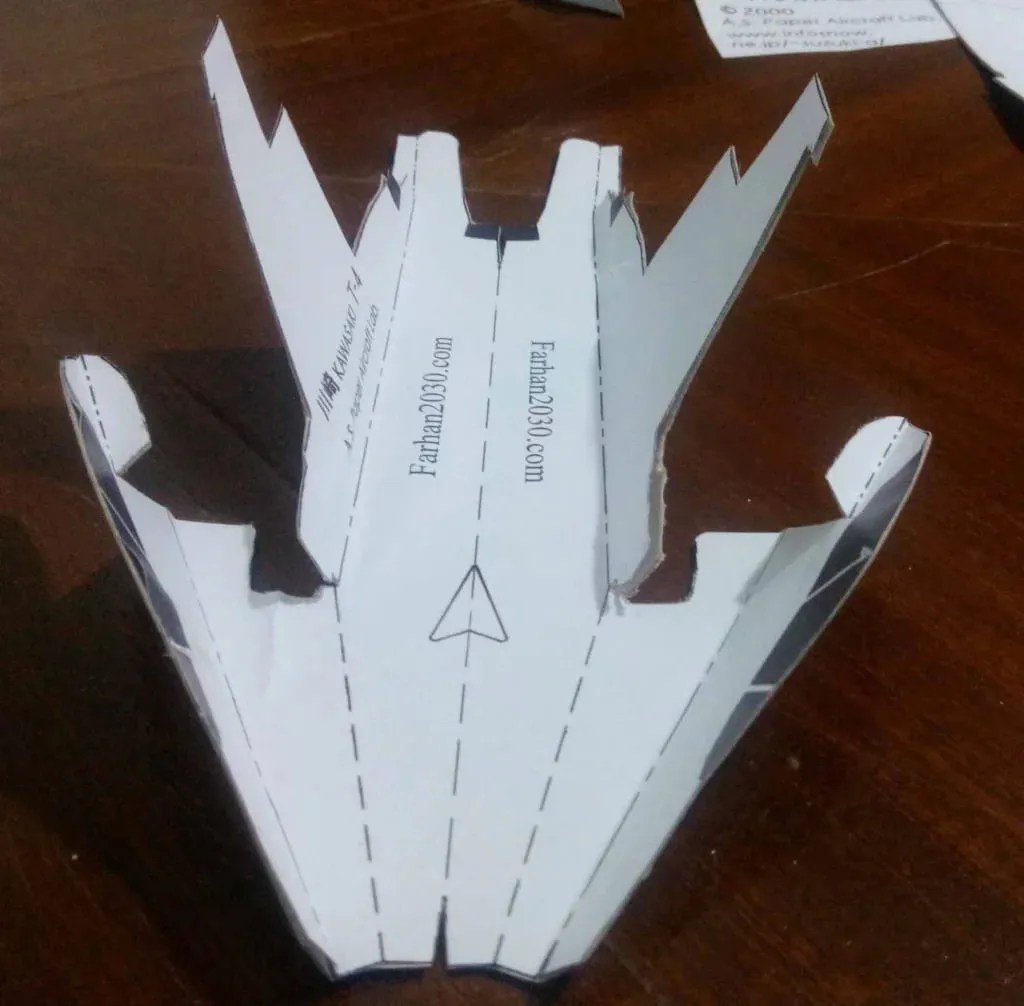
Glue the results of the cutting and folding together using a special adhesive (please use a non-water-based adhesive. Water-based glue will soften and wrinkle the paper, thus reducing the strength of the plane), then wait for the adhesive to dry.
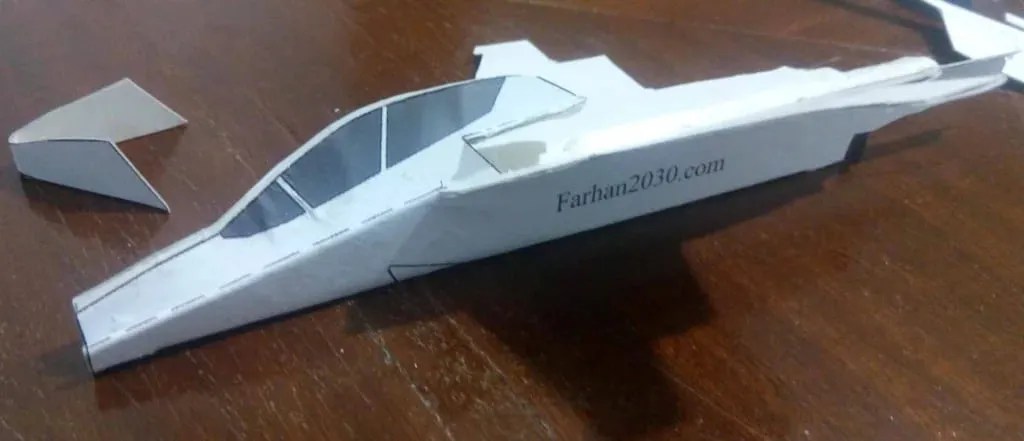

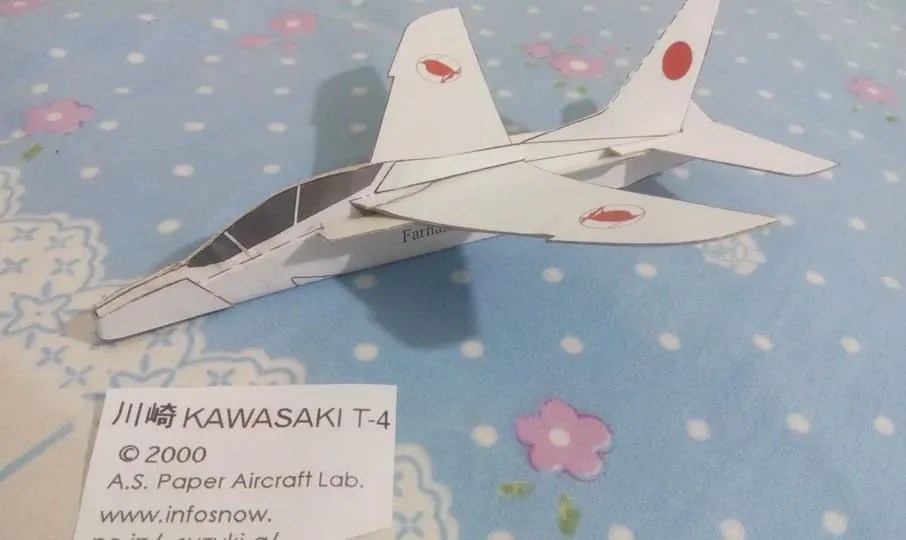
Cut the small corner at the bottom of the nose of the plane in case you want to use the rubber to launch the plane.

Color the paper with any colors and shapes as desired (coloring can also be done in a PDF file before printing it).
After you have finished assembling the paper plane
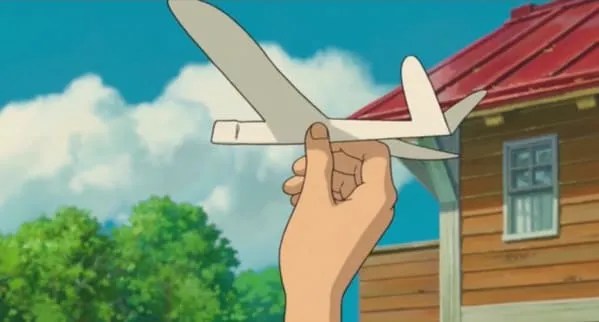
Hold the paper plane under the main wings and throw it, like a dart, slightly downwards (the paper plane should fly along path A before rising slightly to a higher path).

In order for the aircraft to follow path (B), the trailing edge of the tail wings (elevators) must be bent slightly upwards.

In order for the aircraft to follow the path (C), the trailing edge of the tail wings (elevators) must be bent down slightly.

Constantly adjust the elevators and wing pitch to get the best flight path (the plane may stay in the air for up to 15 seconds or more).
Outdoor flight plan with spiral climbing
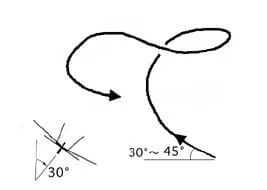
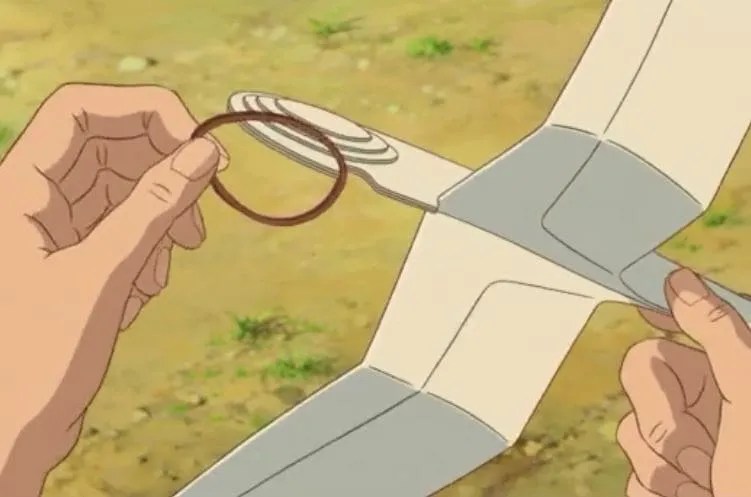
If you throw or launch a paper plane in front of you forcefully (as in the previous example), it will fly a short distance and then immediately lose altitude. To get high altitude and glide for a long time, the paper plane should be launched at an angle of 30 to 45 degrees upwards (as shown in the previous picture) and using a launching device (rubber).

This method is called “spiral climbing” and was founded by Dr. Ninomiya, with the note that this method is best used in open spaces (with caution).
Paper Airplanes available for download
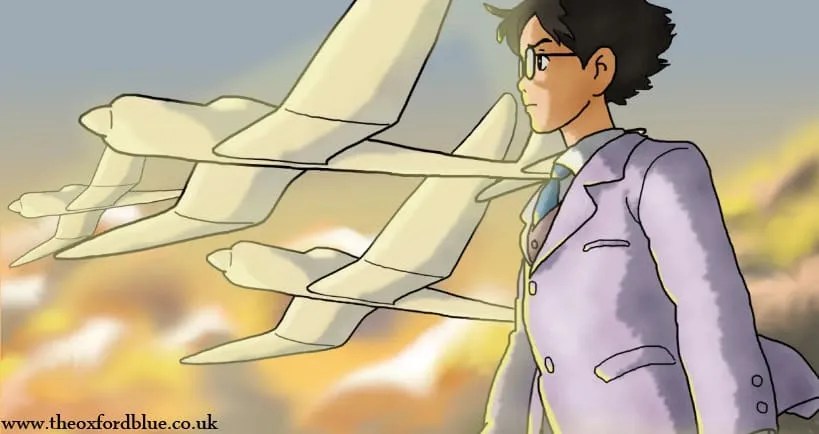
You can now download (29) Paper Airplanes (or flying birds or fish😅) belonging to different types of Paper Airplanes. Note that you can download the basic version of the Paper Airplanes (without additions and colors) or my modified version (I colored and improved it):
Japanese paper airplanes 🇯🇵 (or belonging to Japan Air): Phantom F-4 (basic), Phantom F-4 (modified), Mitsubishi F-2 (basic), Mitsubishi F-2 (modified), Mitsubishi MU-2p (basic), Mitsubishi MU-2p (modified), Kawasaki T-4 (basic), Kawasaki T-4 (modified).
American paper airplanes 🇺🇸: Boeing 787 Dreamliner (basic), Boeing 787 Dreamliner (modified), Cessna Citation V (basic), Cessna Citation V (modified), F-14 Tomcat Openwings (basic), F-14 Tomcat Openwings (modified), F-14 Tomcat Sweptwings (basic), F-14 Tomcat Sweptwings (modified), F-15 Eagle (basic), F-15 Eagle (modified), F-16 Falcon (basic), F-16 Falcon (modified), F-22 Raptor (basic), F-22 Raptor (modified), X-32 (basic), X-32 (modified).

Other paper airplanes: F-18 Hornet (basic), Canadian F-18 Hornet 🇨🇦 (modified), Czech L-39 Albatros 🇨🇿 (basic), Czech L-39 Albatros 🇨🇿 (modified), Eurofighter Typhoon (basic), German Eurofighter Typhoon 🇩🇪 (modified), Tornado (basic), German Tornado 🇩🇪 (modified), Harrier (basic), British Harrier 🇬🇧 (modified), F-35a (basic), British F-35a 🇬🇧 (modified), F-35c (basic), British F-35c 🇬🇧 (Modified).
Russian paper airplanes 🇷🇺: MiG-25 Foxbat (basic), MiG-25 Foxbat (modified), MiG-29 Fulcrum (basic), MiG-29 Fulcrum (modified), Sukhoi-25 Frogfoot (basic), Sukhoi-25 Frogfoot (modified), Sukhoi-57 Fellun (basic), Sukhoi-57 Fellun (modified).
Also available: Glider (Basic), Glider (Modified), Bat 🦇 (Basic), Bat 🦇 (Modified), Dragonfly 🦟 (Basic), Dragonfly 🦟 (Modified), Flying Fish 🐟 (Basic), Flying Fish 🐟 (Modified), Pteranodon Pterosaur (Basic), Seagull (Basic), Seagull (Modified).
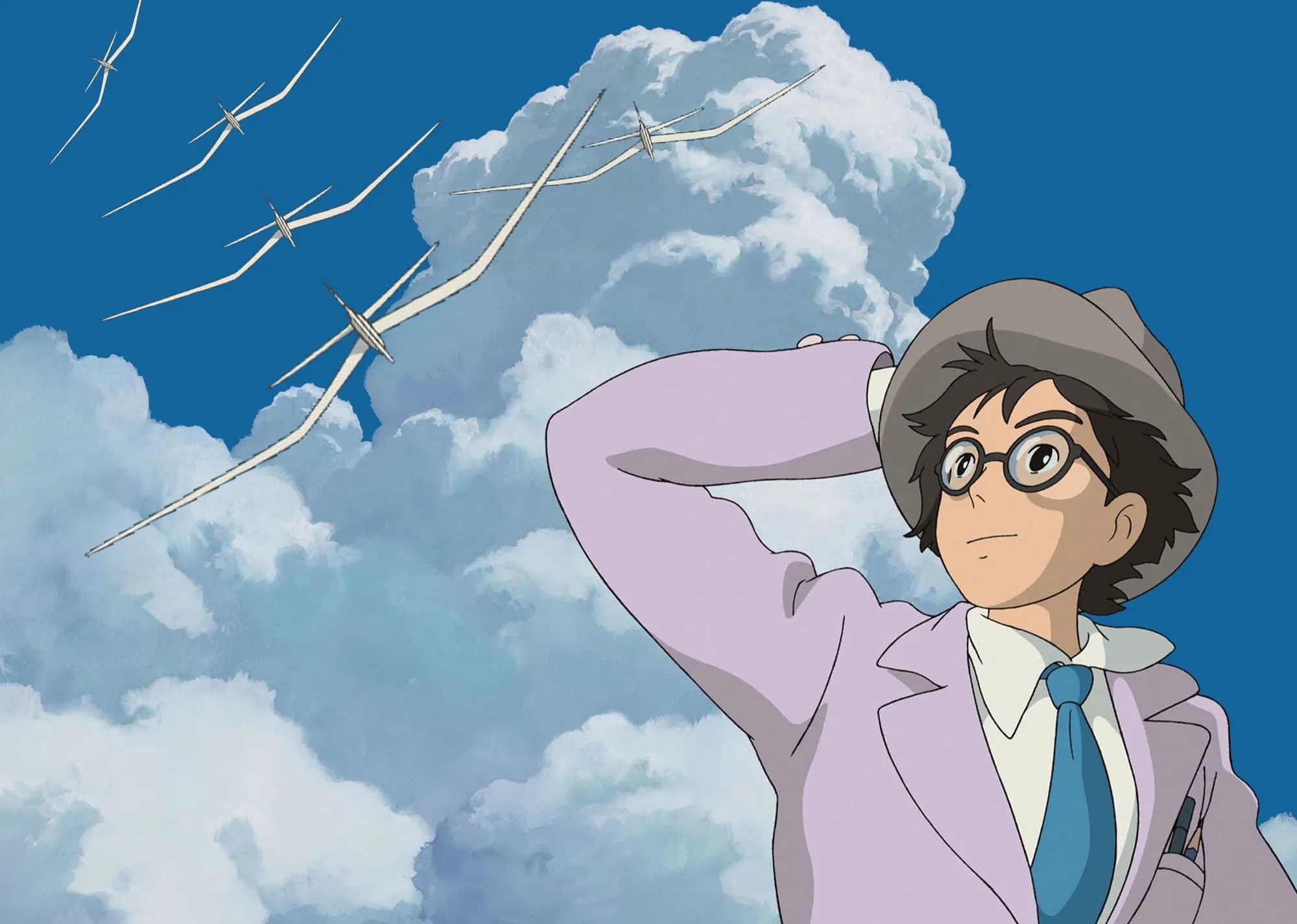
The Wind Rises
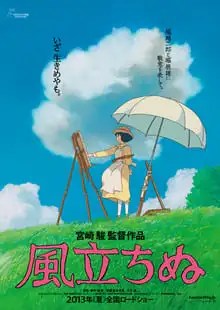
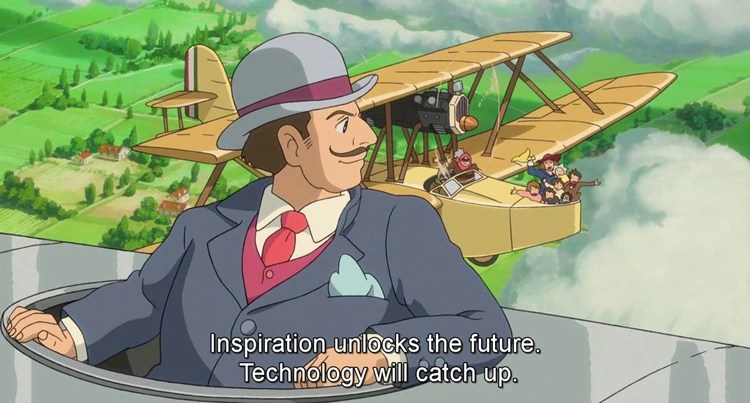
A Japanese anime and historical fantasy film, written and directed by Hayao Miyazaki and produced by Toshio Suzuki. The film’s story is taken from Miyazaki’s manga of the same name, which in turn is taken from a short story by Japanese writer Tatsuo Horii, as well as the biography of Jiro Horikoshi. The film is a (supposed) biography of Jiro Horikoshi, the designer of the Japanese Mitsubishi Zero fighter used in World War II, who dreamed of flying since childhood, and because he could not become a pilot due to eye problems, he decided to take the initiative and pursue his dream of becoming an aeronautical engineer, following his role model, the famous Italian aircraft designer “Caproni”. He also meets a girl named “Nahoko” who will change the course of his life completely. The film also includes the 1973 song “Hikōki-gumo” by singer-songwriter Yumi Matsutoya, as producer Suzuki recommended “Hikōki-gumo” to Miyazaki in December 2012 when he felt the lyrics were similar to the story of The Wind Rises. (Source: Wikipedia)
The (basic) paper airplanes in this article were designed by Akihiko Suzuki, (www.infosnow.ne.jp/~suzuki-a).


Subscribe to get the latest blogs
*-please check the spam folder if you didn’t receive the email

This article by Farhan Blog is licensed under a Creative Commons Attribution-NonCommercial-NoDerivatives 4.0 International


 مدونة فرحان