


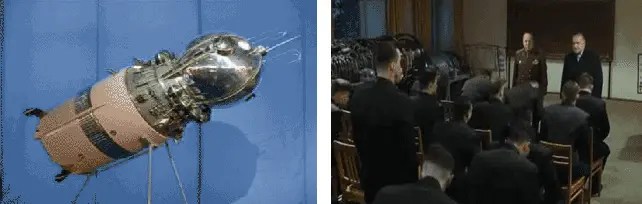
Vostok means “East” in Russian, and is a Soviet project for human spaceflight that succeeded in placing a human in orbit around the Earth for the first time. After the Soviet Union launched the first artificial satellite (Sputnik 1) into space in 1957, preparations began for the first human flight into outer space in 1959. After conducting a very careful selection process for 3,000 candidates, 20 pilots were chosen to prepare them to pilot outer space. After that, there were six manned spaceflights in the “Vostok” program, as the “Vostok 1” flight took off on April 12, 1961, carrying the first astronaut in history (Yuri Gagarin), who orbited the Earth once in 108 minutes and returned safely.

The Vostok 2 mission, launched in the same year, carried cosmonaut German Titov, who orbited the Earth 17 times in 25 hours. It was followed by the Vostok 3 and Vostok 4 spacecraft in 1962, which passed side by side in space. This was followed in 1963 by the launch of the Vostok 5 spacecraft, then Vostok 6, which carried the first woman in outer space (Valentina Tereshkova), who orbited the Earth 48 times in 3 days. The program was then replaced by a new one, Voskhod, which used modified Vostok capsules. By the late 1960s, these programs had been replaced by the Soyuz program, which continues to this day.

References: (Wikipedia.com)، (rt.arabic.com)، (marefa.org).



Subscribe to get the latest blogs
*-please check the spam folder if you didn’t receive the email




 مدونة فرحان