
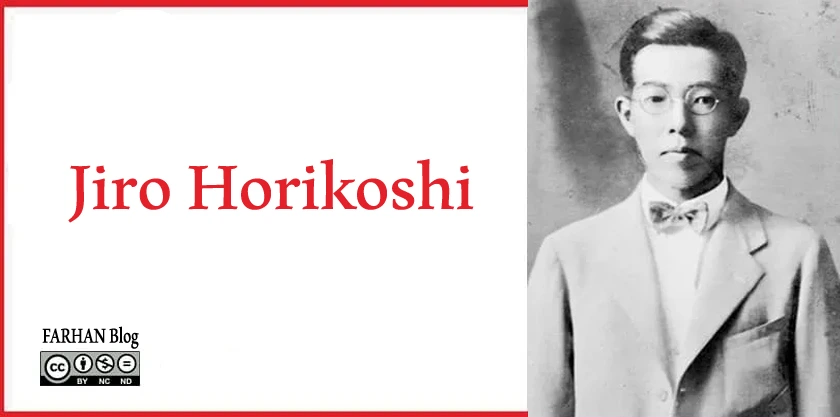

A Japanese aeronautical engineer born in Fujioka, Gunma in 1903. Horikoshi graduated from the newly established Department of Aeronautical Engineering at the University of Tokyo and began working for Mitsubishi, later known as Mitsubishi Heavy Industries, Nagoya Aircraft Plant. Horikoshi initially worked on the Mitsubishi 1MF10, a test aircraft that never went into production, but lessons learned from the aircraft led him to develop the Mitsubishi A5M, which went into mass production in 1936.

In 1937, Horikoshi and his team began working on a newer aircraft, the Mitsubishi Zero A6M, which began flying in 1940 and later served in World War II. After the war, Hirokoshi left Mitsubishi to begin working as a lecturer in research and education centers, serving as a lecturer at the Faculty of Aerospace Engineering at the University of Tokyo from 1963 to 1965, as a professor at the National Defense Academy from 1965 to 1969, and as a professor at the Faculty of Engineering at Nihon University from 1972 to 1973. In 1956 Horikoshi co-authored a book about the Zero with Okumiya Masatake, a general in the Japan Air Self-Defense Forces and one of the commanders of the naval regiments responsible for the Zero during World War II, which was later published in the United States as Zero: The Story of Japan’s Air War in the Pacific. In the 1970s Horikoshi served as an advisor to the Council of Senior Aviation Contractors in Japan and later visited the United States.


In the fall 1973 Honor Roll, Horikoshi was awarded the Order of the Rising Sun, Third Class, for his achievements. His memoirs on the development of the Zero were published in Japan in 1970, and were translated by the University of Washington Press as Eagles of Mitsubishi: The Story of the Zero Fighter, which was published in English in 1981. Horikoshi died of pneumonia in a Tokyo hospital on January 11, 1982, at the age of 78, leaving behind five children.
The Wind Rises

A Japanese anime and historical fantasy film, written and directed by Hayawa Miyazaki and produced by Toshio Suzuki. The film’s story is taken from the manga of the same name, which in turn is taken from a short story by Japanese writer Tatsuo Horii, as well as the biography of Jiro Horikoshi. The film is a (supposed) biography of Jiro Horikoshi, the designer of the Japanese Mitsubishi Zero fighter used in World War II, who dreamed of flying since childhood, and because he could not become a pilot due to problems with his eyes, he decided to take the initiative and pursue his dream of becoming an aeronautical engineer, following the example of his role model, the famous Italian aircraft designer “Caproni”. He also meets a girl named “Nahoko” who will change the course of his life completely. The film also includes the 1973 song “Hikōki-gumo” by singer-songwriter Yumi Matsutoya, as producer Suzuki recommended “Hikōki-gumo” to Miyazaki in December 2012 when he felt the lyrics were similar to the story of The Wind Rises.


One Time Donation
Monthly Donation
Choose amount
Or add customized amount
Thank you for supporting us
Thank you for supporting us

Subscribe to get the latest blogs
*-please check the spam folder if you didn’t receive the email
Reference: Wikipedia

This article by FARHAN Blog is licensed under Creative Commons Attribution-ShareAlike 4.0 International