

You can review the previous articles from the series:
1- Balance Theory: Introduction.
2- Balance Theory: The First Beginnings.
3- Balance Theory Concept.
4- Graph Theory and Balance.
5- Social Balance Theory.
6- Balance Theory: The Situation in Egypt 1956.
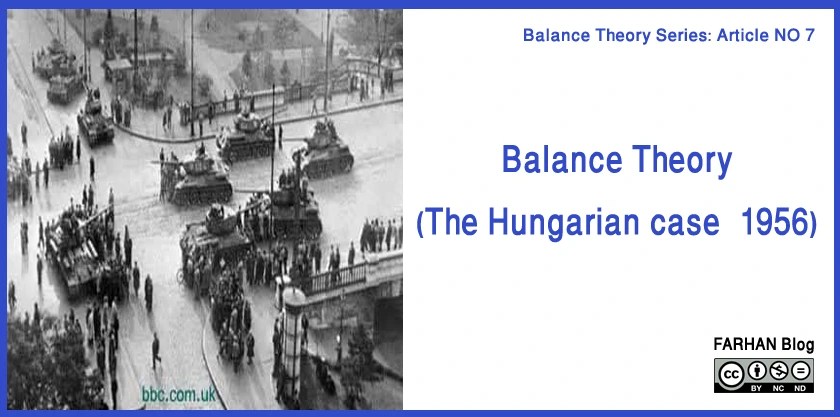
The Hungarian Case 1956

In the next paragraphs we will present the Harary (1961) main discussion on the Balance Theory in Hungarian crisis as he indicates the following: The revolution, the Hungarian uprising, the Hungarian Spring, or the conspiracy and rebellion as the Soviet government calls it, is a movement that continued in Hungary from (23/October) until (4/November) in (1956) and ended with the entry of Soviet tanks into the capital Budapest, and this movement appeared as a result of post-Stalinist political changes in the Soviet Union, nationalist movements of socialist parties in Eastern Europe and social unrest due to the poor economic conditions of ordinary Hungarians. In the following lines, we will reflect the concepts that we talked about earlier _in balance theory and graph theory_ on the Hungarian case, and for this we will use the following abbreviations in the graphs presenting the dynamics of international relationships; and also in the accompanying discussion: (D: India, R: Soviet Union, H: Hungary, FW: Free World).
The rest of the content of this article is exclusive to blog subscribers. You can subscribe for free to the blog’s mailing list to access all Balance Theory articles. You can also request the complete version of the book “Introduction to Balance Theory” via the following link:

الاشتراك لمواصلة القراءة
اشترك للوصول إلى الجزء المتبقي من هذه التدوينة ومحتوى آخر للمشتركين فقط.




 مدونة فرحان